Heart rate variability (HRV) is the variation in time between successive heartbeats. It can add useful context to training and recovery, but there is no universally “best” HRV monitor. The right choice depends on your goal: do you want a deliberate morning baseline measurement, or a passive wearable that tracks trends while you sleep?
To choose the right device, you must prioritize measurement validity and workflow friction over price or brand name.
The HRV Decision Matrix
| Device | Sensor Type | Typical Measurement Mode | Friction | Subscription Consideration | App, Ecosystem and Data Consideration | Best Use Case |
|---|---|---|---|---|---|---|
| Polar H10 | Electrical chest strap | Deliberate spot reading | Medium | No hardware subscription | Requires a compatible app; Polar publishes RR-interval validation data | Accuracy-first morning baselines |
| Oura Ring 4 | Finger PPG | Passive overnight trend | Low | Membership is needed for detailed data and insights | Strong Oura-app dependency; limited app functionality without membership | Long-term sleep and recovery trends |
| WHOOP 5.0 | Wrist PPG | Passive 24/7 trend | Low | Membership required | Recovery scores depend on WHOOP’s app and algorithms | Recovery-focused athletes |
| Garmin HRM 600 | Electrical chest strap | Workout or deliberate spot reading | Medium | No separate wearable subscription | Best feature set with compatible Garmin devices; broadcasts over ANT+ and Bluetooth Low Energy | Garmin ecosystem athletes |
| Compatible Garmin Forerunner | Wrist PPG | Passive overnight trend | Low | No separate wearable subscription | HRV Status is model-specific and requires an overnight baseline | All-in-one sport tracking |
| Polar H7 | Electrical chest strap | Deliberate spot reading | Medium | No hardware subscription | Older Bluetooth-only model; confirm app and phone compatibility | Lower-cost legacy app pairing |
| 4iiii Viiiiva | Electrical chest strap | Deliberate spot reading | Medium | No hardware subscription | Its differentiator is bridging ANT+ sensor data to Bluetooth | Multi-sensor bridging |
| Suunto Smart Sensor | Electrical chest strap | Deliberate spot reading | Medium | No hardware subscription | Older ecosystem-focused option; verify current app support before buying | Existing Suunto users |
1. Top Accuracy-First Choice: Polar H10 Heart Rate Sensor
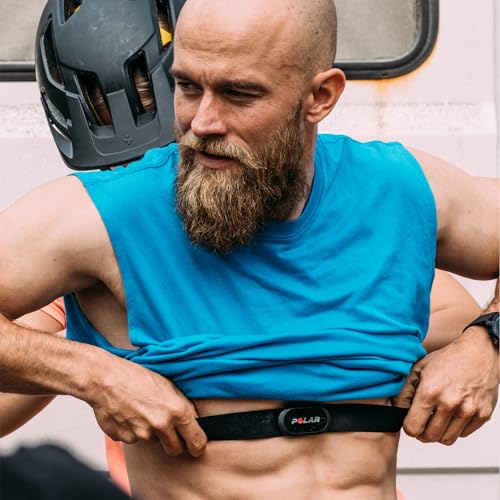
The Polar H10 is the accuracy-first choice in this guide because it records electrical heart signals and supplies the beat-to-beat RR intervals used by compatible HRV apps. Polar’s H10 white paper reports RR-interval validation against reference ECG equipment. That makes the H10 a stronger fit for controlled, still measurements than a wrist or ring chosen mainly for passive convenience.
- Verdict: The best choice here for readers who prioritize a consistent morning or spot-reading protocol.
- Tradeoff: Requires the friction of wetting the strap, putting it on, and sitting still for 2–5 minutes.
- App Compatibility: Designed for Polar apps and commonly used with compatible HRV apps; check the app’s current sensor list before buying.
- Key Specs: Up to 400 hours of battery life, Bluetooth and ANT+ support, and water resistance.
2. Best for Passive Recovery Trends: Oura Ring 4

If you will not commit to wearing a chest strap every morning, the Oura Ring 4 is a convenience-first alternative. It measures pulse-wave changes with photoplethysmography (PPG) at the finger and uses overnight data to build personal trends.
- Verdict: Best for “set it and forget it” long-term trend tracking and sleep analysis.
- Tradeoff: Less suited for immediate post-exercise “live” HRV readings compared to chest straps.
- Membership: Oura says Gen3 and newer rings require membership for detailed data and insights. Without an active membership, the app is limited to the three daily scores and basic account information. See Oura’s current membership guide.
3. Best for Garmin Ecosystem Athletes: Garmin HRM 600

The Garmin HRM 600 is a rechargeable electrical chest strap designed for athletes who already use Garmin watches or cycling computers. It can record supported activities without a watch and sync the stored workout to Garmin Connect. With compatible Garmin devices, it also supports running dynamics and stored swimming heart-rate data.
- Verdict: Best for Garmin users who want a rechargeable ECG strap that provides advanced running dynamics and no monthly subscription.
- Tradeoff: Several advanced running and swimming features require a compatible Garmin device, so it is less compelling if you do not use Garmin’s ecosystem.
- Key Specs: 2-month rechargeable battery, 3 concurrent Bluetooth connections, 5 ATM water rating.
4. Best Continuous Recovery Tracker: WHOOP 5.0
The WHOOP 5.0 is a screenless wearable designed for continuous use. It combines HRV and other measurements into WHOOP’s proprietary Strain, Sleep and Recovery insights.
- Verdict: Best for competitive athletes who want a daily “readiness” score without thinking about measurements.
- Tradeoff: Requires a monthly subscription to access the app and data; the device is not purchased separately.
- Current model: WHOOP’s current membership page lists WHOOP 5.0 with a 14+ day battery for its One and Peak plans. Hardware and features vary by membership tier, so compare the current WHOOP plans before choosing.
5. Ecosystem-Led Watch Option: A Compatible Garmin Forerunner
Choose a Garmin Forerunner that explicitly supports HRV Status if you want an all-in-one sports watch. Garmin’s current compatibility list includes models such as the Forerunner 165, 255, 265, 570, 945 LTE, 955, 965 and 970; it does not list the older Forerunner 245. Compatible watches use wrist heart-rate readings during sleep and require about three weeks of consistent sleep data to establish a baseline. Check Garmin’s current HRV Status compatibility list before buying.
- Verdict: Best if you want a dedicated fitness watch with built-in HRV features rather than a dedicated sensor.
- Tradeoff: Optical wrist sensors are generally less accurate than ECG straps for specific HRV measurements.
6. Legacy and Specialized Alternatives
Polar H7 Bluetooth Heart Rate Sensor
The Polar H7 is the predecessor to the H10. It is a legacy Bluetooth option without the H10’s newer connectivity and storage features. Consider it only if the price is attractive and your chosen phone and HRV app still list it as compatible. Buy on Amazon
4iiii Viiiiva Heart Rate Monitor
The Viiiiva is unusual because it can act as an ANT+ to Bluetooth bridge. If you use compatible ANT+ cycling sensors, the strap can relay their data to a Bluetooth device alongside heart-rate data. See the 4iiii Viiiiva manual and verify current app compatibility.
- Verdict: Best for cyclists and triathletes with complex multi-sensor setups.
Suunto Smart Sensor
The Suunto Smart Sensor is an older, ecosystem-led chest strap originally positioned around compatible Suunto watches and apps.
- Tradeoff: Current phone, app and watch compatibility matters more than its legacy specification list. Verify support before buying rather than assuming older Ambit3 or Movescount-era guidance still applies. The Suunto Smart Sensor manual is useful for hardware details.
Understanding the Technology: ECG vs. PPG
ECG (Electrocardiogram) – Chest Straps
These sensors detect the heart’s electrical activity at the chest and can provide the beat-to-beat intervals used for HRV calculations. They are the better fit here for a short, controlled morning protocol, provided the strap and app expose suitable RR-interval data.
PPG (Photoplethysmography) – Watches and Rings
These sensors use light to detect changes in blood volume at the skin. Movement, fit, skin temperature and measurement location can affect the signal. Their advantage is adherence: a watch or ring can collect passive overnight trends without requiring a separate morning routine.
Morning Spot Readings vs. Overnight Trends
- Morning Spot Readings: Performed immediately upon waking while sitting or lying still for 2-5 minutes. This provides a clean “snapshot” of your nervous system state before the day’s stressors begin.
- Overnight Trends: Devices such as Oura and WHOOP use sleep-period data to build trends. These trends can add context around changes in training, alcohol use, sleep or illness, but they are not directly comparable to a separate morning spot-reading protocol.
Note: HRV values are not interchangeable. A score of 60ms on an Oura ring cannot be compared to a 60ms on a Polar H10. Stick to one device and track your own baseline over time.
Practical HRV Measurement Protocol
To get data you can actually use, follow these steps:
- Consistency is Key: Use the same device, at the same time, in the same body position (usually seated or lying down).
- Context Matters: One low reading is not automatically “bad.” Compare it with your own baseline and consider recent training, sleep, illness and routine changes.
- Account for Noise: Motion, changed posture, poor sensor contact, alcohol, disrupted sleep and travel can affect a reading. Record the context rather than interpreting the number in isolation.
Frequently Asked Questions
Which device is best if I only care about accuracy?
The Polar H10 paired with a compatible app is the accuracy-first recommendation in this guide because it can provide beat-to-beat RR intervals for a controlled measurement. Follow the same protocol each day and verify that your chosen app supports the sensor.
Can I use a phone camera for HRV?
Some apps use a phone camera and flash as a finger PPG sensor. This can be convenient, but results depend on the app, phone, finger pressure, stillness and protocol. Check the app developer’s current compatibility and validation information before relying on it.
When does a chest strap beat a ring?
A chest strap beats a ring for “live” biofeedback (like breathing exercises) and when you need a highly accurate measurement in a short period (spot check). A ring beats a strap for long-term compliance, as most people find it easier to wear a ring to sleep than a strap.
Does HRV decrease with age?
Population research generally finds age-related differences in HRV, but individual values vary widely. For day-to-day use, compare readings with your own established baseline rather than treating an age-group average as a target.
Disclaimer: Consumer HRV readings can support training and wellness decisions, but they should not be used on their own to diagnose or rule out a health condition. Consult a qualified healthcare professional about symptoms or medical concerns.